 Aura Mesh Window
Why do some railings rust faster than others? The answer begins with exposure, material quality, and small installation choices. A balcony beside a busy coastal road faces salt spray, humidity, and airborne pollutants. An indoor stair rail usually avoids these stresses. Yet sheltered areas can still corrode when condensation remains trapped around joints.
Dr. Pierre R. Roberge, a respected corrosion engineer and author, described the process clearly: “Corrosion is the destructive attack of a metal by chemical or electrochemical reaction with its environment.” His definition explains why identical-looking railings may age differently. One may use stainless steel with suitable alloy content. Another may use mild steel beneath a thin, damaged coating. Scratches expose fresh metal. Water gathers at welds. Rust then spreads beneath the paint like a dark, uneven tide.
This guide examines Why do some railings rust faster than others through practical corrosion principles. It considers metal composition, drainage, coating thickness, surface preparation, fasteners, and maintenance records. Real inspection experience matters here. A railing can appear sound while rust quietly expands inside a hollow post.
Small clues matter.
Brown streaks beneath bolts may indicate galvanic corrosion. Flaking paint often signals moisture beneath the coating. Still, no checklist is perfect. Poor lighting can hide early pitting, and cleaning can remove visible evidence. That limitation deserves attention. Reliable conclusions require close inspection, environmental context, and, when necessary, professional testing. The goal is not merely to explain rust. It is to help readers choose, install, inspect, and maintain railings that remain safer and more durable through changing conditions.
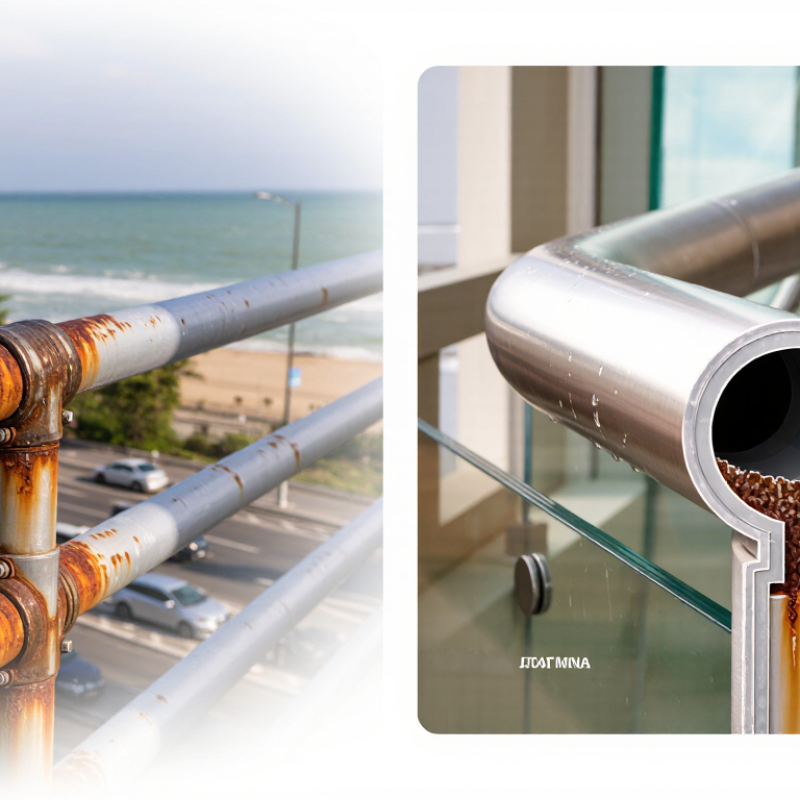
Why do some railings rust faster than others? Exposure, material, design, and maintenance decide the answer. The NACE IMPACT study estimated global corrosion costs at $2.5 trillion annually, equal to 3.4% of global GDP. A U.S. Federal Highway Administration study estimated American corrosion costs at $276 billion each year. Railings face a smaller but visible version of that problem. Carbon steel rusts quickly when coatings are scratched. Stainless steel usually resists longer, but salt deposits can still cause staining and localized corrosion. Water trapped inside hollow posts creates hidden damage. Not all rust begins on the surface.
Tips: Match the railing material to its exposure. ISO 9223 classifies atmospheric corrosivity from very low to extreme. A coastal walkway may need stronger protection than an indoor stair. Inspect welds, fasteners, drain holes, and cut edges twice yearly. Rinse salt and grit with clean water. Abrasive cleaning can damage coatings. Keep records. They reveal patterns.
Geometry often matters more than appearance. Flat ledges collect rain, dust, and de-icing salts. Tight joints stay damp after nearby metal dries. Poorly sealed end caps can hold water for weeks. The NACE IMPACT study connects corrosion control with better design, material selection, and inspection. Coating thickness alone is not enough. In practice, installers sometimes overtrust a fresh finish. That is a mistake. A railing may look perfect in October and show bubbling paint by spring. Local climate, drainage, galvanic contact, and cleaning habits should guide selection. Rustproof is rarely permanent.
| Railing Material or Condition | Typical Corrosion Risk | What Happens | Main Factors That Control Rusting Speed | Typical Atmospheric Corrosion Reference | Most Vulnerable Areas | Recommended Protection and Maintenance |
|---|---|---|---|---|---|---|
| Uncoated Carbon Steel | High | Iron reacts with oxygen and water to form porous iron oxides. The rust layer does not reliably seal the steel surface, so corrosion can continue underneath. | Relative humidity, time of wetness, salt contamination, pollutants, scratches, standing water, and poor drainage. | ISO 9223 atmospheric categories range from less than 1.3 µm/year in very low-corrosivity conditions to more than 200 µm/year in extreme conditions during the first year. | Cut edges, welds, bolt joints, crevices, base plates, and areas where water remains trapped. | Use a complete primer-and-topcoat system, seal crevices, remove damaged coating promptly, and keep surfaces clean and dry. |
| Painted or Powder-Coated Steel | Medium | The coating separates the steel from moisture and oxygen. Once the film is damaged or moisture reaches an exposed edge, under-film corrosion may spread. | Surface preparation, coating thickness, edge coverage, impact damage, ultraviolet exposure, water retention, and coating breakdown. | The underlying steel follows the local atmospheric corrosivity category; the coating can substantially delay visible rust when properly applied and maintained. | Sharp edges, fasteners, weld discoloration, impact points, drilled holes, and coating holidays. | Inspect annually, repair chips before rust spreads, avoid incompatible touch-up products, and maintain drainage around posts. |
| Hot-Dip Galvanized Steel | Low to Medium | A zinc layer provides barrier protection and sacrificial protection. Zinc corrodes preferentially and can protect small exposed steel areas. | Zinc coating thickness, chloride exposure, industrial pollutants, abrasion, cut edges, drainage, and contact with dissimilar metals. | Zinc corrosion rates vary strongly with atmospheric category; marine and industrial atmospheres generally consume zinc faster than rural atmospheres. | Unsealed hollow sections, cut or drilled areas, threaded connections, abrasion points, and water-trapping details. | Use suitable zinc-rich repair products on damaged areas, avoid prolonged contact with standing water, and isolate dissimilar metals where needed. |
| Weathering Steel | Medium | A protective patina can form under alternating wet and dry exposure. If the surface stays continuously wet or receives heavy salt contamination, the patina may remain unstable. | Wet-dry cycling, drainage, chloride deposition, humidity, sheltered crevices, and the ability of the surface to dry fully. | No single corrosion rate applies to all sites; performance depends on whether a dense, adherent patina can develop under the local climate. | Horizontal ledges, crevices, joints, sheltered faces, and locations where rust runoff can stain adjacent materials. | Provide open drainage and ventilation, prevent salt accumulation, and avoid details that keep the steel continuously damp. |
| Stainless Steel 304 | Low in Mild Conditions | A thin chromium-rich passive film normally protects the surface. Chlorides can cause localized pitting or crevice corrosion even when general rusting is limited. | Chloride concentration, surface contamination, crevice geometry, weld heat tint, cleaning practices, and low-oxygen conditions. | General corrosion is usually very low in normal indoor and urban exposure, but localized corrosion risk increases near coastal salt spray and de-icing salts. | Tea-staining zones, welds, underside crevices, threaded joints, scratches containing carbon-steel contamination, and salt deposits. | Use clean tools dedicated to stainless steel, remove chloride deposits, clean regularly, and design joints to drain and ventilate. |
| Stainless Steel 316 | Low | Molybdenum improves resistance to chloride-induced pitting compared with 304 stainless steel, although it is not immune to corrosion. | Chloride level, temperature, deposits, crevices, surface finish, weld condition, and exposure duration. | Generally more suitable than 304 for coastal or salt-exposed railings, but severe marine deposits and stagnant crevices can still cause localized attack. | Crevices under clamps, stagnant joints, welds, fasteners, and surfaces where salt spray dries and concentrates. | Rinse salt deposits, avoid carbon-steel contamination, specify appropriate welding and finishing, and eliminate stagnant crevices. |
| Aluminum Alloy | Low for Red Rust | Aluminum does not form iron rust. It develops a thin oxide film, but pitting, galvanic corrosion, and white powdery corrosion products can occur. | Chlorides, alkaline cleaners, trapped moisture, dissimilar-metal contact, coating damage, and poor drainage. | Red-rust rates are not applicable; corrosion is usually localized and strongly dependent on alloy, surface condition, and galvanic contacts. | Fasteners, joints, drain holes, cut ends, coated areas, and contact points with copper or carbon steel. | Use compatible fasteners and isolating washers, prevent water traps, avoid harsh alkaline cleaners, and repair coating damage. |
| Any Railing with Poor Drainage | High | Trapped water extends the time that the surface remains wet. Low-oxygen crevices can promote localized corrosion and accelerate coating failure. | Closed tube ends, unsealed joints, horizontal ledges, blocked drain holes, condensation, and contact with wet concrete. | Corrosion risk increases as time of wetness rises; local crevice conditions can be much more aggressive than the surrounding atmosphere. | Post bases, tube interiors, lap joints, undersides of handrails, and connections near concrete or paving. | Use sealed or properly vented hollow sections, add drainage holes where appropriate, slope horizontal surfaces, and keep bases clear of standing water. |
| Railing with Dissimilar-Metal Contact | Medium to High | When different metals contact each other in the presence of an electrolyte, galvanic corrosion can accelerate attack on the less noble metal. | Metal combination, exposed surface-area ratio, electrical contact, moisture, salt concentration, and joint design. | There is no universal corrosion rate; galvanic effects are site-specific and can be severe in wet or salt-contaminated joints. | Bolted connections, clamps, brackets, washers, fasteners, and interfaces between aluminum, steel, stainless steel, and copper alloys. | Use compatible materials, electrically isolate the metals, seal joints, avoid unfavorable area ratios, and inspect connections regularly. |
Exposure, material, shape, drainage, and maintenance all affect rust speed. Coastal air usually causes faster damage.
Stainless steel often lasts longer than carbon steel. Salt deposits can still create stains and localized corrosion.
Flat ledges collect rain, dust, and salt. Tight joints stay damp. Poor end caps may hold water for weeks.
Yes. Trapped water can damage hidden surfaces. Small drainage holes help water escape.
Rinse salt and grit with clean water. Check welds, fasteners, cut edges, and brackets twice yearly.
Orange dust, bubbling paint, scratches, and stains are useful warnings. A dry cloth can reveal hidden residue.
No. Surface preparation, drainage, sealed joints, and exposure also matter. A fresh finish can still fail by spring.
Record dates, weather exposure, coating damage, and cleaning methods. Records help reveal repeated problem areas.
Installers may trust a perfect-looking finish too much. I have underestimated small drainage details before. Water wins.
Why do some railings rust faster than others? The answer depends on several connected factors, including the metal’s composition, surface preparation, protective coating, exposure conditions, and overall design. Metals with lower corrosion resistance may oxidize sooner, while high-quality coatings can create a barrier against water and oxygen. However, even durable materials can deteriorate when coatings are scratched, poorly applied, or weakened by age.
Weather and surrounding conditions also play a major role. Frequent moisture, coastal salt, industrial pollution, and repeated temperature changes can accelerate corrosion, especially in joints, hollow sections, and areas where water collects. Installation quality and maintenance are equally important: poor drainage, trapped dirt, loose fasteners, and neglected scratches can allow rust to spread quickly. Choosing railings suited to the local environment, ensuring correct installation, cleaning them regularly, and repairing coating damage early can significantly extend their service life and preserve both safety and appearance.
