Aura Mesh  Window Aura Mesh Window

2026 Top Gazebo Styles How to Choose the Right One?

Time:2026-10-23 Author:Mason
0%

Choosing a gazebo is more than selecting an attractive roof and frame. It means studying your backyard, daily habits, climate, and available space. In 2026, popular gazebo styles include modern aluminum structures, classic wooden pavilions, soft-roof shelters, and compact pergola-inspired designs. Each option creates a different outdoor experience.

So, how do you answer “How to choose the right style of gazebo for a backyard”? Start with real conditions. Measure the patio carefully. Notice where afternoon rain falls. Check whether tree roots, drainage, or strong winds could affect installation. A six-seat dining gazebo may look inviting, but it can overwhelm a narrow garden. I have seen homeowners focus on appearance first, then regret poor shade coverage later.

Landscape architect and garden designer Frank Lloyd Wright offered a useful principle: “Study nature, love nature, stay close to nature. It will never fail you.” His words apply here. A gazebo should respond to its surroundings, not fight them. Match its roofline with the house, repeat nearby materials, and leave comfortable walking space around the structure.

Small details matter. A low-pitched roof suits a contemporary home. Natural timber feels warmer beside planting beds. Removable screens can improve comfort during mosquito season. Built-in lighting helps, but excessive brightness can make the garden feel harsh.

There is no perfect style.

This guide compares the leading 2026 gazebo designs, including their strengths, limitations, costs, maintenance needs, and practical uses. Some recommendations may change after you observe your own backyard at different times of day. That uncertainty is useful. It encourages a more honest choice.
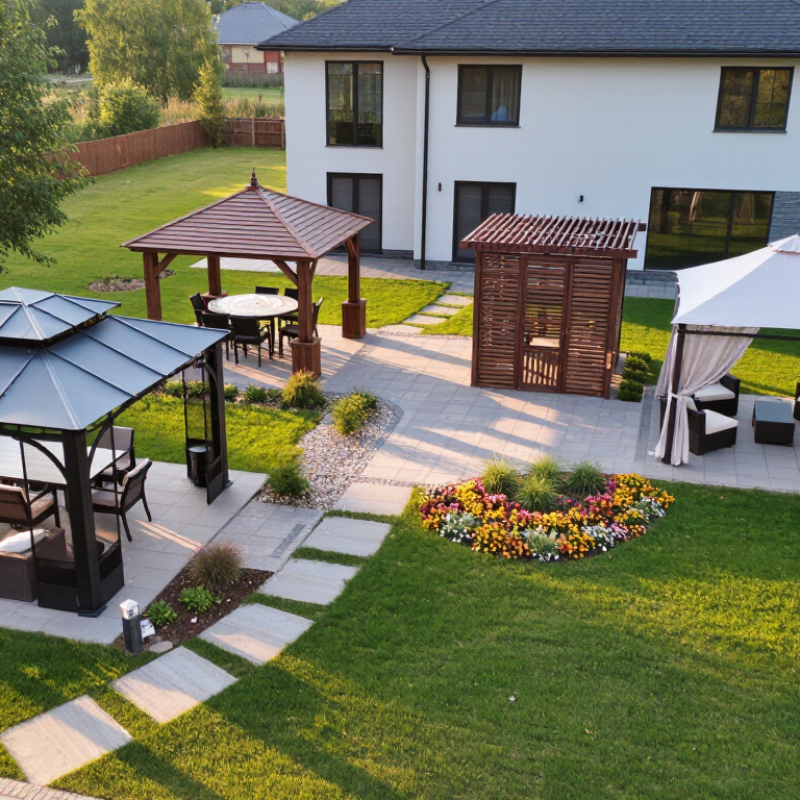
2026 Top Gazebo Styles How to Choose the Right One?

Define Gazebo Types: Hardtop, Soft-Top, Pergola, and Portable Canopies

In 2026, gazebo selection starts with understanding each structure’s purpose. A hardtop gazebo has a rigid metal or composite roof. It provides stronger protection from rain, sunlight, and light snow. Its fixed design suits patios used throughout the year. However, it needs firm anchoring, good drainage, and enough clearance for maintenance. It is not maintenance-free.

A soft-top gazebo uses fabric stretched over a lightweight frame. It creates flexible shade and usually costs less than a hardtop model. Fabric panels may need seasonal storage, cleaning, or replacement.

A pergola has an open, slatted roof that creates patterned shade. It supports climbing plants and improves airflow, but it will not keep furniture dry during heavy rain. Portable canopies use folding frames and removable covers. They work well for markets, picnics, and temporary gatherings. Strong tie-downs remain essential, even on calm-looking days.

Measure the patio before choosing a frame. Check wind exposure, roof load ratings, corrosion resistance, and the condition of the ground. Local installation requirements may also apply. I once chose a fixed roof for a narrow yard and regretted losing afternoon sunlight. A simple chair test can reveal that problem. Sit beneath the planned structure at different times. Note heat, glare, dripping edges, and walking space before purchasing.

Compare 10×10, 12×12, and 12×16-Foot Gazebo Footprints by Use

A gazebo’s footprint should match the way you live outdoors, not just the available patio space. A 10×10-foot gazebo suits compact seating areas, small dining sets, or two lounge chairs with a side table. It leaves more open ground around the structure. This clearance helps with walking, mowing, and visual balance.

A 12×12-foot gazebo offers a more flexible middle ground. It can hold a six-person table, a grill placed safely outside, and comfortable circulation inside. The extra two feet on each side make movement easier, especially when guests carry plates. I once underestimated doorway clearance and regretted it. Measure twice. Furniture layouts need real dimensions, not optimistic guesses.

A 12×16-foot gazebo works best for larger gatherings or divided zones. One end can hold dining furniture, while the other supports sofas, lighting, and storage. Its longer shape suits rectangular patios and poolside areas, but it needs stronger site planning. Check drainage, wind exposure, roof runoff, and local installation requirements before choosing the footprint. A large gazebo may look impressive, yet feel awkward on a narrow yard. The 10×10 option feels efficient, the 12×12 feels adaptable, and the 12×16 feels event-ready. Personal habits matter more than visual scale.

Evaluate Roof Materials with UPF 50+ and CPAI-84 Fabric Benchmarks

2026 Top Gazebo Styles: How to Choose the Right One?

A gazebo’s roof material affects comfort, safety, and service life. UPF 50+ fabric is a strong starting point for sunny patios. It blocks at least 98% of ultraviolet radiation under testing conditions. However, coverage depends on fabric tension, seams, and open sides. A vented roof can release trapped heat, while a solid roof offers better rain protection. Your climate should guide the style.

Tips: Ask for the fabric test report, not only a printed label. Confirm the UPF result applies to the finished material. For CPAI-84, check whether the canopy fabric was tested for flame propagation. CPAI-84 is a useful benchmark, but it is not a universal safety approval. Review the test date, fabric composition, and laboratory details. Keep these records.

Touch the sample before buying. A tightly woven polyester may feel firm, while a coated fabric can feel smoother and heavier. Look closely at stitching around corners and attachment points. Weak seams can reduce real-world protection. I once underestimated ventilation and chose a darker roof; the shade was excellent, but the space became noticeably warmer. That mistake still matters. Color, coating, and airflow can change comfort more than photographs suggest. UV resistance also declines with weathering, cleaning, and repeated folding.

2026 Top Gazebo Styles: How to Choose the Right One? — Evaluate Roof Materials with UPF 50+ and CPAI-84 Fabric Benchmarks

A practical comparison of gazebo styles, roof materials, ultraviolet protection, fire-performance verification, durability, and ideal applications.

Gazebo Style and Roof Material Comparison
Gazebo Style Typical Roof Material UV Protection CPAI-84 Relevance Weather and Heat Behavior Expected Maintenance Best Application Selection Guidance
Hardtop Pavilion Powder-coated aluminum panels or insulated metal panels Typically UPF 50+
Opaque metal blocks UV transmission through the roof.
Not applicable to rigid metal
CPAI-84 is intended for certain tent and canopy fabrics, not metal roofing.
Strong rain and snow resistance when properly engineered; opaque roofs can reduce direct solar gain but may still become warm in full sun. Low; inspect fasteners, sealants, drainage paths, and surface corrosion periodically. Permanent outdoor dining, patios, hot tubs, and four-season installations. Choose a verified structural rating for local wind and snow loads.
Louvered Pergola Adjustable aluminum louvers UPF 50+ when closed
Closed aluminum louvers provide an opaque overhead barrier.
Not applicable to aluminum louvers
Any attached fabric shade should be assessed separately.
Provides adjustable ventilation and shade; open louvers admit sunlight and rain, while closed louvers require effective drainage. Moderate; clean louvers and gutters, lubricate moving parts only as specified, and check motor or manual controls. Modern patios where users want variable sunlight, airflow, and rain control. Check the closed-position seal, drainage design, and actuator protection.
Soft-Top Gazebo Coated polyester, acrylic fabric, or PVC-coated polyester Must be verified
Fabric UPF depends on fiber, weave density, color, coatings, moisture, and aging.
Request a product test report
CPAI-84 performance must be confirmed for the exact fabric and construction; it should not be inferred from appearance.
Lightweight and breathable options can be comfortable; coated fabrics offer better water resistance but may retain more heat. Moderate to high; dry completely before storage, clean according to fabric instructions, and inspect seams and coatings. Seasonal seating, outdoor events, and users who want a lighter structure than a hardtop. Prioritize documented UPF 50+ results and fabric-specific CPAI-84 evidence.
Pop-Up Canopy Woven polyester or coated polyester fabric Varies widely
Dark, dense, coated fabric may test higher than thin, light-colored, or wet fabric, but testing is required.
Important for fabric canopies
Confirm that the complete canopy fabric has been tested rather than relying on a generic material description.
Fast to deploy but generally less resistant to strong wind than anchored permanent structures; water resistance depends on coating and seams. High; dry before folding, check frame joints, clean mildew promptly, and use suitable anchoring. Temporary shade, markets, parties, camping, and short-duration outdoor use. Choose a canopy with clear fabric specifications, reinforced corners, and an anchoring plan.
Cantilever Gazebo Polyester, acrylic fabric, or PVC-coated fabric canopy Must be verified
Retractable or tensioned fabric can provide UPF 50+ only when tested in the finished assembly.
Fabric-specific verification required
Confirm CPAI-84 documentation for the canopy material and configuration where applicable.
Creates unobstructed floor space; the offset roof increases sensitivity to wind, so the base and retraction procedure are important. Moderate; retract during severe weather, clean the fabric, and inspect arms, pivots, and tension points. Pool decks, balconies, outdoor dining, and areas requiring clear access below the roof. Favor a reliable locking system and a clearly stated maximum operating wind condition.
Wood Pavilion Solid wood rafters with asphalt shingles, metal panels, or polycarbonate sheets Usually UPF 50+ when opaque
Solid roofing blocks UV; translucent panels require a tested UV-blocking specification.
Depends on any fabric component
Rigid shingles, wood, and metal are outside the usual CPAI-84 fabric scope.
Heavy and stable when engineered correctly; wood requires protection from moisture, insects, and repeated wet-dry cycles. Moderate to high; inspect finish, joints, flashing, roof drainage, and signs of rot or corrosion. Traditional gardens, permanent entertaining areas, and landscape-integrated structures. Evaluate foundation anchoring, roof ventilation, local load requirements, and wood protection.
Polycarbonate Roof Gazebo Solid or multiwall polycarbonate panels with a UV-protective surface layer Often UPF 50+ when specified
Verify the panel’s tested UV transmission and confirm which side faces outward.
Not a fabric benchmark
CPAI-84 does not normally evaluate rigid polycarbonate panels.
Light transmission varies by panel tint and structure; expansion gaps are necessary because polycarbonate moves with temperature. Low to moderate; use non-abrasive cleaning methods and inspect seals, washers, and panel edges. Bright patios and garden shelters where daylight is desired with overhead UV protection. Compare solar heat gain, visible-light transmission, thickness, and UV-side labeling—not UPF alone.

How to Read the Benchmarks

  • UPF 50+: A UPF rating of 50 or higher indicates that the material allows no more than 1/50 of measured UV radiation to pass through, equivalent to blocking at least 98% under the applicable textile test conditions.
  • UPF is not automatically transferable: A fabric’s rating can change with stretch, moisture, wear, color, weave density, seams, and installation angle. Look for test results for the actual finished fabric or canopy assembly.
  • CPAI-84: This is a flammability performance benchmark associated with certain camping tents, awnings, and similar fabric structures. It is not a universal fire rating for every gazebo roof and should not be treated as proof of overall fire safety.
  • Rigid roof materials: Aluminum, steel, wood, shingles, and polycarbonate are not normally evaluated using CPAI-84. Review the applicable local building, fire, electrical, and structural requirements instead.
  • Wind and snow: No roof material alone determines safety. Frame design, anchoring, span, connections, drainage, local exposure, and engineering loads are equally important.
Data represents typical material behavior and selection guidance. Actual performance depends on product construction, test method, installation, climate, maintenance, and local regulations. Always request current technical documentation for the exact gazebo model and roof assembly.

Check Wind, Snow, and Anchoring Loads Under ASCE 7-22 Criteria

2026 Top Gazebo Styles: How to Choose the Right One?

Gazebo style should follow local exposure, not only appearance. Open-roof structures reduce some wind pressure, but enclosed panels can increase uplift and lateral forces. Under ASCE 7-22 criteria, evaluate basic wind speed, exposure category, terrain, and building importance. Coastal sites, open fields, and hilltops often demand greater caution. A decorative roof may look light, yet its connections can carry serious loads.

Snow design also requires more than checking average snowfall. Roof slope, drifting, unbalanced snow, and nearby taller buildings can change the load pattern. Anchors must resist uplift, sliding, and overturning through the entire load path. Concrete thickness, soil strength, bolt spacing, and post connections all matter. A strong frame cannot compensate for weak footings. Local amendments may also change the adopted requirements, so a licensed structural professional should review the final design. I would not rely on a generic load chart alone.

Tips: Measure the site carefully. Record nearby trees and buildings. Check local wind and snow data. Ask whether the ground freezes. Use corrosion-resistant connectors in wet locations. Keep drainage away from footings. Recheck the design after adding screens, lights, or a heavier roof. Small changes can matter.

Choose by Climate, Maintenance, Budget, Local Codes, and Site Conditions

2026 Top Gazebo Styles: How to Choose the Right One?

Climate should guide the gazebo style before appearance does. In wet regions, choose a raised floor, sloped roof, and corrosion-resistant fasteners. In snowy areas, check the roof’s rated snow load carefully. Heavy snow can distort a beautiful structure. Coastal air demands regular rinsing and stronger protection against salt corrosion. Start there. Measure twice.

Maintenance depends on your tolerance for seasonal work. Wood offers warmth but needs sealing, inspection, and occasional board replacement. Metal can reduce upkeep, yet scratches may expose areas to rust. Fabric roofs feel light and flexible, but ultraviolet light can weaken them. I have seen owners underestimate cleaning time. Their “low-maintenance” choice still needed frequent attention.

Budget includes more than the purchase price. Add delivery, foundations, drainage work, lighting, and future repairs. A smaller, well-anchored gazebo may outperform a larger structure on soft ground. Check local codes before ordering. Rules may cover setbacks, height, electrical work, wind resistance, or permits. Ask the relevant building office for written requirements. Keep it simple. Observe the site after rain, too. Standing water, tree roots, and afternoon glare can change the best location. Sometimes the ideal design looks less impressive on paper. It simply works better.

FAQS

What can fit inside a 10×10-foot gazebo?

It suits two lounge chairs, a side table, or a compact dining set.

When is a 12×12-foot gazebo the better choice?

It offers a flexible middle ground for outdoor living.

What is a 12×16-foot gazebo best for?

It works well for larger gatherings or divided outdoor zones.

How should wind and snow affect gazebo selection?

Check local wind speed, terrain, exposure, and snow conditions.

Why are anchors and footings so important?

Anchors must resist uplift, sliding, and overturning.

Which gazebo features help in wet or coastal climates?

Choose a raised floor, sloped roof, and corrosion-resistant fasteners.

What maintenance should owners expect?

Wood needs sealing, inspections, and occasional board replacement.

What costs should be included in the budget?

Include delivery, foundations, drainage work, lighting, and future repairs.

Conclusion

Choosing the right gazebo begins with understanding the main styles: hardtop gazebos offer durability and permanent shade, soft-top models provide flexibility and easier installation, pergolas create an open-air structure with filtered sunlight, and portable canopies work well for temporary events or changing layouts. The best footprint depends on how you use your yard: a 10×10-foot gazebo suits compact seating areas, a 12×12-foot option accommodates dining or conversation sets, while a 12×16-foot design provides more room for entertaining and multiple activity zones. Asking “How to choose the right style of gazebo for a backyard” also means considering the available space, furniture arrangement, and local site conditions.

Roof selection should include practical benchmarks such as UPF 50+ sun protection and CPAI-84 fabric performance for suitable covered materials. Buyers should also review wind and snow resistance, anchoring methods, and applicable ASCE 7-22 load considerations. Finally, compare climate demands, maintenance needs, budget, local codes, drainage, ground stability, and installation access before selecting a gazebo that is safe, functional, and well matched to the property.

Mason

Mason

Mason is a seasoned marketing professional with a deep expertise in the company's offerings and a passion for driving brand awareness. With a strong background in digital marketing strategies, he has an innate ability to connect with diverse audiences and effectively communicate product benefits.......