Aura Mesh Window
Aura Mesh Window
Aura Mesh Window

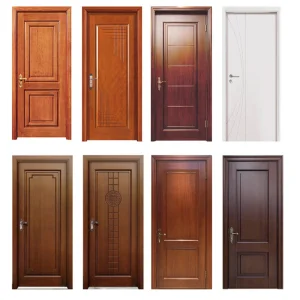
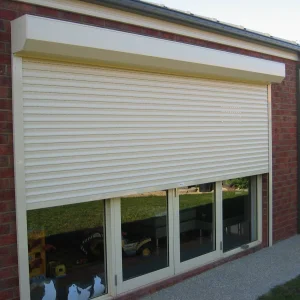
In the contemporary architectural landscape, the building envelope is no longer viewed merely as a barrier separating the interior from the exterior. Instead, it operates as a sophisticated, dynamic skin system that directly influences a building's energy footprint, environmental lifecycle, acoustic properties, and aesthetic identity. As urbanization accelerates globally, developers and architects require commercial facade solutions that integrate aesthetics with high performance.
OEM/ODM custom facade manufacturing is at the epicenter of this evolution. Standard off-the-shelf facade systems often fail to meet the complex geographic, structural, and regulatory requirements of tier-one metropolitan projects. From wind shear dynamics in high-altitude zones to strict seismic performance margins, commercial facades must be engineered to withstand microclimatic extremes. This demand has transitioned facade supply chains from simple material sourcing to complete co-engineering, where manufacturers collaborate dynamically with engineering teams to produce structural glazed curtain walls, unitized facade panels, and thermally isolated system windows.
Utilizing high-tensile 6063-T5/T6 architectural aluminum profiles, modern OEM facade systems allow for expansive glazed openings without compromising load-bearing limits. Tailored structural silicones and mechanical retention systems guarantee stable load distribution.
By implementing advanced multi-cavity thermal breaks (such as Technoform polyamide insulation strips) coupled with double or triple-pane argon-filled Low-Emissivity (Low-E) glass, current facade solutions achieve exceptionally low U-values, mitigating structural HVAC load.
Urban dense developments mandate high sound transmission class (STC) ratings. Laminated safety glass compositions with PVB or acoustic interlayers suppress mid-to-high-frequency noise pollution, ensuring internal acoustic comfort.
Developing high-rise commercial structures requires deep adherence to strict engineering parameters. Through precise OEM/ODM production processes, materials are verified for performance across several structural indicators. Our production facilities maintain rigorous quality control checkpoints, verifying that every customized aluminum profile extrusion and processed glass unit satisfies structural, mechanical, and safety thresholds.
| Performance Indicator | Standard Thresholds | OEM Custom Capability Range | Engineering Significance |
|---|---|---|---|
| U-Factor (Thermal Transmittance) | ≤ 1.8 W/(m²·K) | 0.8 to 1.2 W/(m²·K) | Minimizes conductive heat transfer, lowering heating/cooling demand. |
| Solar Heat Gain Coefficient (SHGC) | 0.25 to 0.40 | 0.15 to 0.35 (Low-E selective) | Controls solar radiation penetration, essential in hot climates. |
| Wind Load Resistance | Class 4 (≥ 2.5 kPa) | Up to Class 9 (≥ 5.0 kPa) for hurricane zones | Prevents structural deformation under cyclic wind stress. |
| Sound Transmission Class (STC) | 35 dB | 40 dB to 48 dB (Acoustic laminated) | Dampens external environmental noise for high-occupancy towers. |
| Air Infiltration & Water Resistance | Class A1 / Class W1 | ASTM E331 & ASTM E283 compliance | Eliminates structural water ingress under pressure differentials. |
For international buyers, contractors, and real estate developers, securing reliable facade manufacturers is a multifaceted operation involving technical verification, risk mitigation, and compliance mapping. Key concerns center around supply chain consistency, logistical safety of fragile elements, and international building code matching (such as EN, ASTM, AS/NZS standards). Proactive OEM suppliers handle these anxieties through systematic project steps:
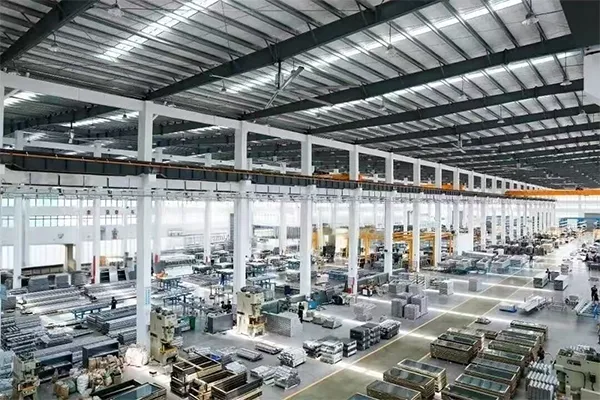
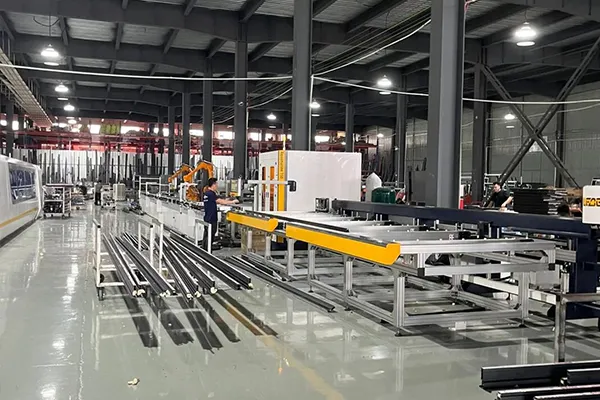
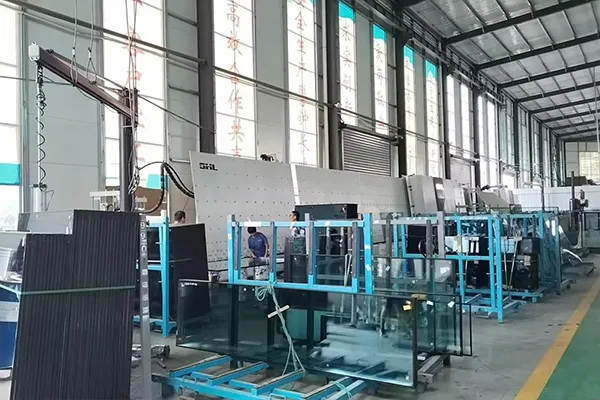
Established in Anyi County, Nanchang City, Jiangxi Province, our manufacturing center represents over ten years of specialized industrial presence. Our facility spans a 30,000 square meter factory layout, optimized to process raw materials into engineered architectural structures. We manage the entire value chain—from structural aluminum extrusion to custom double-glazed unit fabrication—under strict quality control systems.
Our operation is powered by specialized production infrastructure: 6 glass deep-processing lines, 8 door and window assembly lines, and 4 fence production lines. Among our 150 employees, 45 are dedicated architectural and design engineers. These professionals are assigned to projects to deliver CAD drafting, shop drawings, structural calculation reviews, wind load optimization, and comprehensive installation guidelines.
Established in Anyi County, Jiangxi Province, as a dedicated production base focused on custom glass processing, structural door/window units, and architectural fence profiles.
Diversified operations into aluminum interior structures and unitized wall assemblies. Expanded engineering staff to accommodate large-scale OEM/ODM project demands.
Grown into a comprehensive service provider of door, window, and facade systems, exporting high-performance structural systems to over 100 countries across Africa, Asia, Australia, and the Americas.
As international construction standards push toward net-zero carbon footprints, facade manufacturers must adopt advanced material technologies. Our engineering group has defined a clear technology roadmap focusing on sustainable design, energy performance, and smart systems integration:
Integrating crystalline silicon solar cells directly into vertical curtain wall glazed panels. These systems transform static surfaces into energy-generating elements, optimizing facade efficiency.
By connecting to building management systems (BMS), these glass panels automatically alter light transmission properties based on external lux levels, reducing cooling loads by up to 20%.
Developing lightweight cladding profiles by combining UHPC with Glass Fiber Reinforced Concrete to produce sustainable, complex structural shapes for contemporary buildings.