Aura Mesh Window
Aura Mesh Window
Aura Mesh Window
Engineered to withstand coastal conditions and meet rigorous local and international building codes.
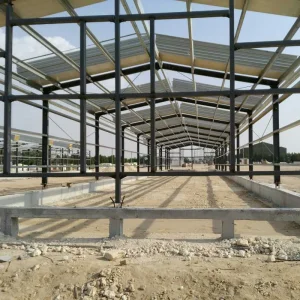
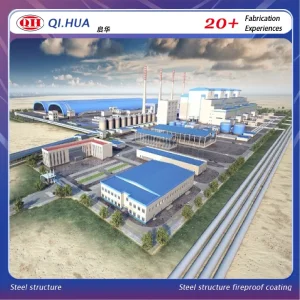
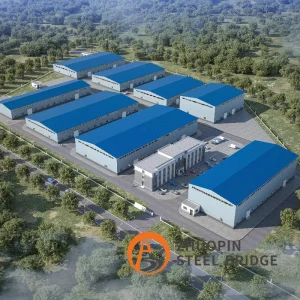
As the historic gateway to Bahrain and a critical modern logistics hub, Muharraq—comprising major investment enclaves like the Hidd Industrial Area and regions adjacent to Bahrain International Airport—has transitioned into a dense, high-demand commercial zone. High-density developments and major logistical facilities require precision-engineered structural solutions capable of meeting both local environmental conditions and the strict municipal building regulations of the Kingdom.
Building in Muharraq presents unique geographic and environmental challenges. Located in the Arabian Gulf, structural elements are subjected to extreme temperatures, high relative humidity, and aggressive marine salts (chloride and sulfate exposure). These factors contribute to accelerated galvanic and atmospheric corrosion. Consequently, any building material or prefabricated structure imported into the market must feature robust corrosion protection, such as high-build epoxy systems or hot-dip galvanization conforming to BS EN ISO 1461 standards.
Furthermore, structural designs must comply with Bahrain’s Unified Municipal Building Code and must be processed through the national portal Benayat, which enforces strict guidelines for load resistance, fire safety, wind velocities, and seismic parameters. Navigating these requirements demands close collaboration with manufacturers who possess deep knowledge of international design standards and structural engineering calculations.
Comparing international structural engineering design codes to Bahrain Municipal Guidelines for Muharraq.
When engineering steel structures for Muharraq, a simple one-size-fits-all approach is insufficient. Project owners and municipal engineers require detailed calculations showcasing adherence to specific load patterns. The table below details how various global and regional standards map to local municipal requirements in Muharraq:
| Design Criteria | AISC / ASTM (US Standard) | Eurocodes / EN (European) | GB Standards (Chinese) | Bahrain Building Code Requirements |
|---|---|---|---|---|
| Wind Load Design | ASCE 7 (ASD or LRFD methodologies) | EN 1991-1-4 (Wind actions) | GB 50009 (Load code for building structures) | Min. design wind speed of 45 m/s (162 km/h) basic velocity parameters. |
| Seismic Engineering | IBC / ASCE 7 (Seismic Design Category A-F) | EN 1998 (Eurocode 8: Seismic resistance) | GB 50011 (Seismic design code) | Equivalent to Zone 2A/2B parameters depending on geotechnical micro-zoning. |
| Structural Steel Grades | ASTM A36, A572 Gr 50, A992 | EN 10025 (S275JR, S355JR, S355JO) | Q235B, Q355B, Q420 | Equivalencies must be certified by independent third-party laboratories. |
| Corrosion Mitigation | SSPC (Society for Protective Coatings) levels | ISO 12944 (Corrosion categories C1 to C5) | GB/T 15957 (Atmospheric corrosion guidelines) | Mandatory C4 High to C5 Marine grade coating systems for exposed structural components. |
Navigating municipal clearances and structural vetting platforms for industrial and commercial projects.
All building permit applications in Muharraq are submitted and processed through the Benayat online licensing system. This platform streamlines approvals by utilizing licensed engineering offices. Structural calculations must be submitted in fully compatible BIM formats (.rvt or .ifc) alongside comprehensive structural analysis reports generated in approved software suites (e.g., STAAD.Pro, Tekla Structural Designer, or SAP2000).
Fire separation zones, structural steel fireproofing (intumescent coatings or gypsum boards achieving up to 2-hour fire resistance ratings), and exit capacities must be certified by the Bahrain Civil Defence. Pre-engineered steel buildings must include design provisions for fire-rated walls and fire doors complying with ASTM E119 or EN 1363 testing protocols.
Muharraq's coastal reclamation areas present challenging soft clay and silty sand profiles. Ground improvement or deep pile foundations are often necessary. Our structural engineering department coordinates directly with local geotechnical engineering consultants in Bahrain to tailor building column base reactions and anchor bolt patterns to the exact pile-cap and foundation layouts designed for the site.
How advanced fabricators optimize processing, reduce lead times, and match stringent regional building criteria.
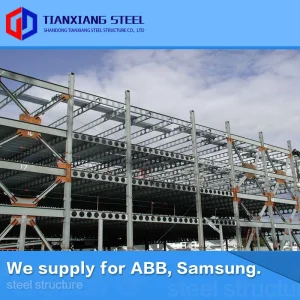
The global construction industry operates in an environment defined by tight timelines and highly competitive budgets. Procuring prefabricated structural steel and building systems from premium Chinese fabricators offers clear advantages in terms of cost-effectiveness, production capacity, and technical compliance.
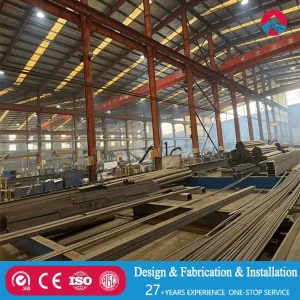
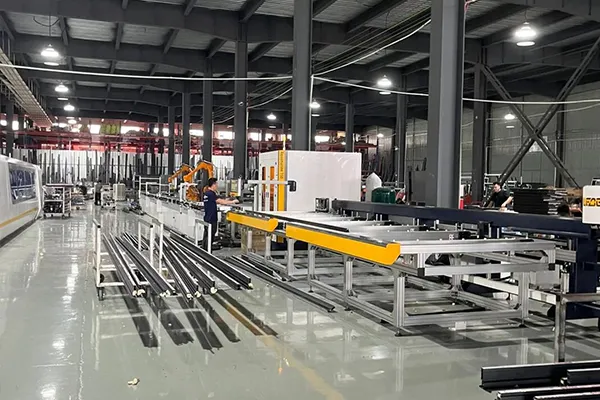
By leveraging automated CNC fabrication lines, advanced sub-arc welding stations, and integrated shot-blasting processes, our manufacturing ecosystem delivers structural elements with tolerances tighter than those required by standard manual processing. This level of precision is critical when shipping structural frames to distant destinations like Muharraq, where on-site assembly must proceed smoothly without structural modifications or re-drilling.
Additionally, our comprehensive understanding of international certification regimes (including the European EN 1090 Execution Class EXC2/EXC3, American Institute of Steel Construction (AISC) quality parameters, and ISO 9001:2015 management metrics) ensures that all delivered components arrive with complete material trace documentation, mill test reports, and non-destructive testing (NDT) records. This transparent trace history simplifies inspection and approval processes with local municipal authorities in Bahrain.
A decadelong journey of engineering excellence, scaling from foundational profile processing to global modular structural solutions.
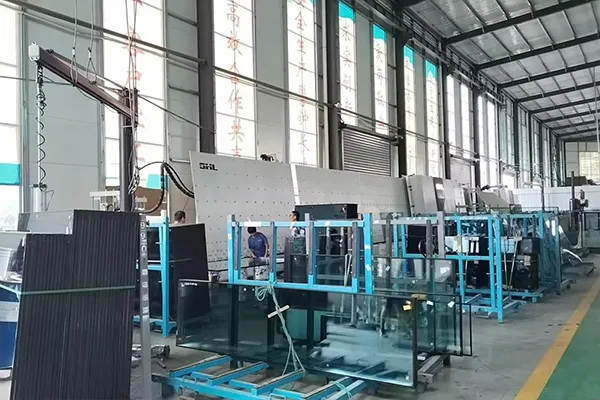
Establishment and Foundation (circa 2015): The company was founded in Anyi County, Nanchang City, Jiangxi Province. It is a manufacturing factory integrating research and development, and professional deep processing of glass, doors, windows, and aluminum fences.
We have been in this industry for over 10 years. The factory covers an area of 30,000 square meters and has 6 production workshops, 6 glass production lines, 8 door and window production lines, and 4 fence production lines. Currently, the factory has 150 employees, 45 of whom are engineers. These engineers are responsible for providing customers with design solutions, construction plans, optimized technical drawings, new product development, and installation tutorials. A dedicated engineer will be assigned to handle the relevant solutions for each order. We have a professional transportation team to prevent damage to glass, doors, windows, and other fragile items during transportation. Our main export regions include Africa, Asia, Australia, and the Americas. We export to more than 100 countries, with an annual export value exceeding US$8 million.
• Steady Development Period: In its early stages, the company mainly engaged in the trade, custom processing, and sales of various industrial and architectural aluminum profiles and door and window accessories. With business development, it gradually accumulated customer resources and market understanding.
• Expansion and Transformation (around 2020): The company began to extend downstream in the industrial chain, expanding its business from single profile trading and processing to the research, design, and production of all-aluminum home furnishings. This was an important strategic expansion for the company, seizing the market opportunity for environmentally friendly and durable all-aluminum home furnishings.
• Branding and Diversified Development (to date): Currently, the company has developed into a comprehensive industrial and trading enterprise integrating industrial aluminum profiles, all-aluminum home furnishings, system doors and windows, and high-end door and window accessories. It expands its national market through a combination of online and offline channels.
Core Development Trajectory: From aluminum profile trading and processing → extending to all-aluminum home furnishing manufacturing → to becoming a comprehensive service provider of door and window systems and accessories.
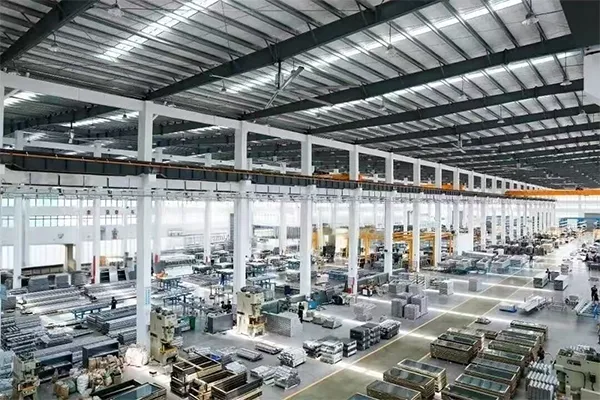
Aligning structural planning with the future of green and modular construction.
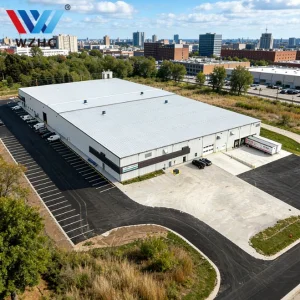
Within the Muharraq region, as well as globally, several target applications require strict compliance with building codes and optimized structural designs:
The construction sector is experiencing a significant shift toward sustainability. Major developers in the GCC (Gulf Cooperation Council) region are prioritizing green building credentials (LEED or regional equivalent). Pre-engineered steel structures naturally support this trend, as structural steel is highly recyclable. Furthermore, modern off-site prefabrication reduces waste and construction times in dense urban areas like Muharraq, minimizing local traffic disruption and reducing the overall carbon footprint of the project.
Explore our complete catalog of certified prefabricated components for global industrial and commercial requirements.
Answers to critical questions regarding structural approvals, code compliance, and import logistics for Muharraq.
Receive comprehensive engineering assistance, compliant project designs, and competitive pricing for your next commercial, industrial, or logistics development in Muharraq.
Send Inquiry Now